
Registration
Royal Canadian College of Massage Therapy is Registered as a Career College under the Ontario Career Colleges Act, 2005.
Published February 19, 2026
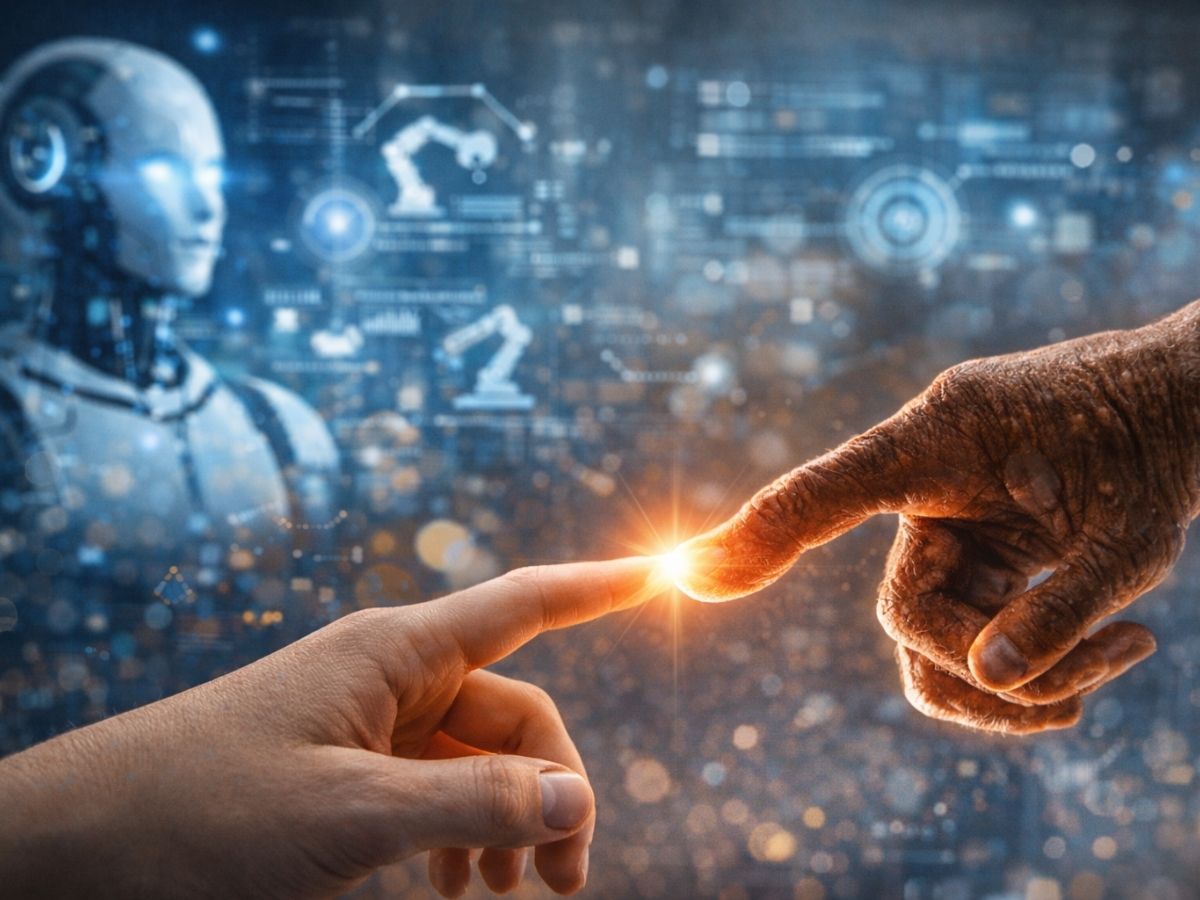
In a recent episode of the Making Sense with Sam Harris, host Sam Harris discussed the accelerating impact of artificial intelligence on the workforce.
Referencing insights from Mustafa Suleyman - co-founder of DeepMind and now a senior AI executive at Microsoft - the conversation highlighted a striking prediction: within roughly 18 months, AI systems may match or exceed human performance in most professional cognitive tasks.
Not factory work.
Not hands-on trades.
Not physically skilled professions.
Instead, high-status, white-collar roles.
Lawyers.
Software engineers.
Financial analysts.
Even certain areas of medicine.
For decades, students were told that the safest path forward was clear: earn a degree, enter a knowledge-based profession, climb the ladder. But what happens if the ladder itself begins to shift? Suleyman’s warning isn’t simply that jobs will evolve. It’s that the very structure supporting many traditional career paths may change - quickly. For those who invested heavily in education to access cognitively driven professions, the ground beneath those roles may not be as stable as it once seemed.
That’s not meant to alarm.
It’s meant to encourage clarity.
The Surprising Safe Zones
Here’s the part that surprises many people.
The earliest disruption isn’t projected to affect:
Why?
Because physical presence, therapeutic touch, real-time decision-making, and human connection are extraordinarily difficult to automate.
AI can draft contracts.
It can write code.
It can analyze medical scans.
But it cannot palpate tissue.
It cannot feel subtle changes in muscle tone.
It cannot respond to a patient’s body in real time through skilled hands.
It cannot build trust through physical presence.
Massage therapy is rooted in something deeply human: touch, awareness, and care.
Why Human Work Still Matters
As AI advances, it excels at pattern recognition and language generation. But it struggles with embodiment - with being physically present in a room, responding moment by moment to another human being.
Massage therapy requires:
Strong anatomical knowledge
Clinical reasoning
Fine motor skill
Emotional intelligence
Professional judgment
But beyond that, it requires something that can’t be downloaded or automated: therapeutic touch delivered with intention. In an increasingly digital world, stress levels are rising. People are spending more time on screens. Physical strain and nervous system overload are becoming common. The need for skilled, in-person care is not disappearing. If anything, it may grow.
A Career Grounded in Reality
Massage therapy has several qualities that make it uniquely resilient:
Many Registered Massage Therapists build independent practices, manage flexible schedules, and avoid the heavy debt load associated with some traditional academic pathways. In a time of economic uncertainty and technological disruption, careers grounded in tangible skill and human care offer something powerful: stability.
Choosing Work That Remains Human
No one can predict the future perfectly. But credible leaders in the AI space are suggesting that change is accelerating faster than most people expected.
So the question becomes: What kind of work will remain distinctly human? Massage therapy does not compete with machines. It offers something machines cannot replicate. In a world increasingly shaped by algorithms, human touch becomes more - not less - valuable.
Term 1 and Term 2 emphasis is placed on learning basic knowledge of the Human Body. In Term 3 and Term 4 the focus will be on the application, knowledge, and the refinement of clinical skills.
Royal Canadian College of Massage Therapy is Registered as a Career College under the Ontario Career Colleges Act, 2005.
Please, enter a valid value
Please, enter a valid value